AI-Integrated Industry Training:
Web Development, Data Analytics, Digital Marketing, Java & Python
|
2 Months Practical Training + 1 Month Internship
|
Fee:
₹9,999 per Program
|
Apply Now

Why Do Most Startups Fail?
Before understanding the solution, we need to understand the problem.
According to multiple studies, startups fail due to reasons like:
Poor market understanding
Weak business models
Cash flow issues
Lack of leadership clarity
Wrong pricing decisions
No customer validation
Interestingly, these failures are not caused by bad intentions or low effort.
They happen because founders learn too late.
Many entrepreneurs jump straight into execution.
They skip learning.
They skip guidance.
That mistake costs time, money, and motivation.

Failure Is Often a Knowledge Gap Problem
Most startup failures come from avoidable mistakes.
For example:
Launching without validating demand
Spending too much money too early
Hiring the wrong people
Misunderstanding customer behavior
These mistakes repeat across industries.
This shows that failure is not random.
It follows patterns.
And patterns can be taught.
This is exactly where structured training helps founders build a strong base.
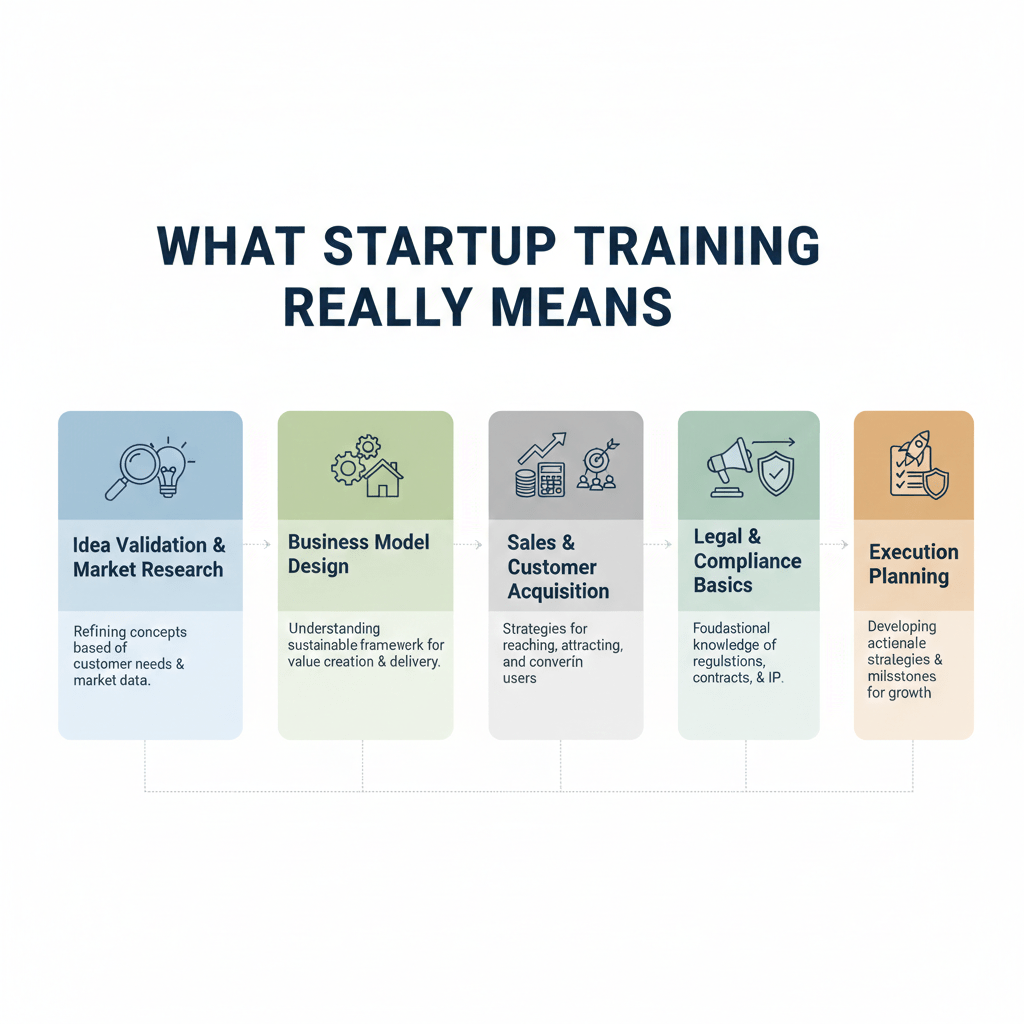
What Startup Training Really Means
Startup training is not motivational talk.
It is not theory-heavy classroom teaching.
Good startup training focuses on practical business fundamentals.
It usually covers:
Idea validation and market research
Business model design
Basic finance and cash flow planning
Sales and customer acquisition
Legal and compliance basics
Execution planning
Training helps founders think clearly before acting.
Instead of guessing, they learn how to analyze.
Instead of reacting, they learn how to plan.
How Training Reduces Startup Failure Rates
Training prepares founders for real challenges.
It reduces failure in multiple ways.
1. Training Improves Decision Making
When founders understand business fundamentals, they make better decisions.
They:
Spend money carefully
Choose the right market
Set realistic goals
Avoid unnecessary risks
This clarity directly reduces early-stage failure.
2. Training Reduces Costly Trial and Error
Without training, founders learn by making mistakes.
Mistakes cost money.
Training helps founders learn from others’ mistakes, not their own.
That alone saves months of struggle.
3. Training Builds Confidence With Logic
Confidence without knowledge is dangerous.
Training builds confidence backed by understanding.
Founders feel prepared.
They act with clarity.
They stay calm during challenges.
Why Mentorship Is Even More Powerful Than Training
Training gives structure.
Mentorship gives direction.
A mentor has already walked the path.
They have failed.
They have learned.
They have survived.
According to the Wadhwani Foundation, mentorship often becomes the difference between startup success and failure because mentors help founders stay focused and realistic.
You can read more about this perspective in their article on why mentorship is critical for startups:
Mentorship Is Critical to Separate Startup Success and Failure
How Mentorship Reduces Startup Failure Rates
Mentorship works at a deeper level.
It addresses both business and mindset issues.
1. Mentors Help Avoid Predictable Mistakes
Most startup problems are predictable.
Mentors recognize red flags early.
They warn founders before damage happens.
This early intervention saves startups.
2. Mentorship Brings Real-World Perspective
Books and courses explain concepts.
Mentors explain reality.
They talk about:
Market behavior
Customer psychology
Operational challenges
Team management issues
This perspective reduces wrong assumptions.
3. Mentors Provide Emotional Stability
Startup journeys feel lonely.
Pressure builds fast.
Mentors provide:
Emotional support
Honest feedback
Motivation during low phases
This mental support reduces burnout-driven failure.
Training and Mentorship Work Best Together
Training and mentorship should not compete.
They should complement each other.
Training answers:
What to do
How things work
Mentorship answers:
When to act
What to avoid
How to adapt
According to business mentorship studies, startups that combine structured learning with mentorship show higher survival and growth rates.
This is clearly explained in this article on how mentorship programs reduce business failure:
How Business Mentorship Programs Reduce Failure and Build Profitable Companies
Together, training and mentorship create balance.
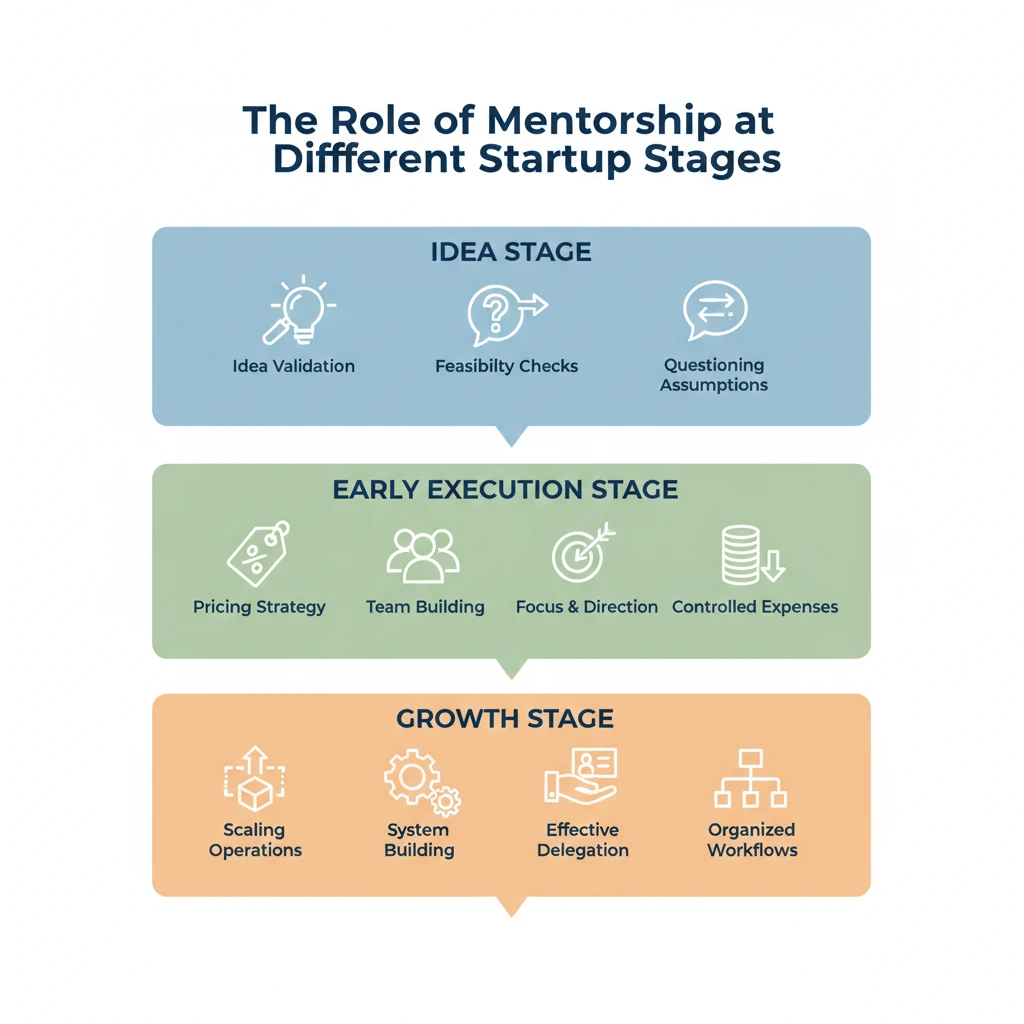
Role of Mentorship at Different Startup Stages
Mentorship changes as startups grow.
Idea Stage
Mentors help validate ideas.
They challenge assumptions.
They test feasibility.
Early Execution Stage
Mentors guide pricing, hiring, and positioning.
They prevent overspending.
They improve focus.
Growth Stage
Mentors help with scaling.
They advise on systems and delegation.
They reduce chaos.
This stage-wise support directly lowers failure risk.