AI-Integrated Industry Training:
Web Development, Data Analytics, Digital Marketing, Java & Python
|
2 Months Practical Training + 1 Month Internship
|
Fee:
₹9,999 per Program
|
Apply Now

Understanding Internships
What an Internship Actually Provides
An internship is usually a short-term experience where you work with a company to learn how things function in a real environment. You are not expected to be an expert. Companies often give you simple tasks so you can observe and learn. You understand work culture, team structure, responsibilities, and communication patterns.
Internships give a student a taste of the professional world. You learn how to attend meetings, how to communicate with seniors, and how a business workflow moves from one stage to another. But an internship does not always guarantee deep technical or practical learning. It largely depends on the organization and the role assigned to you.
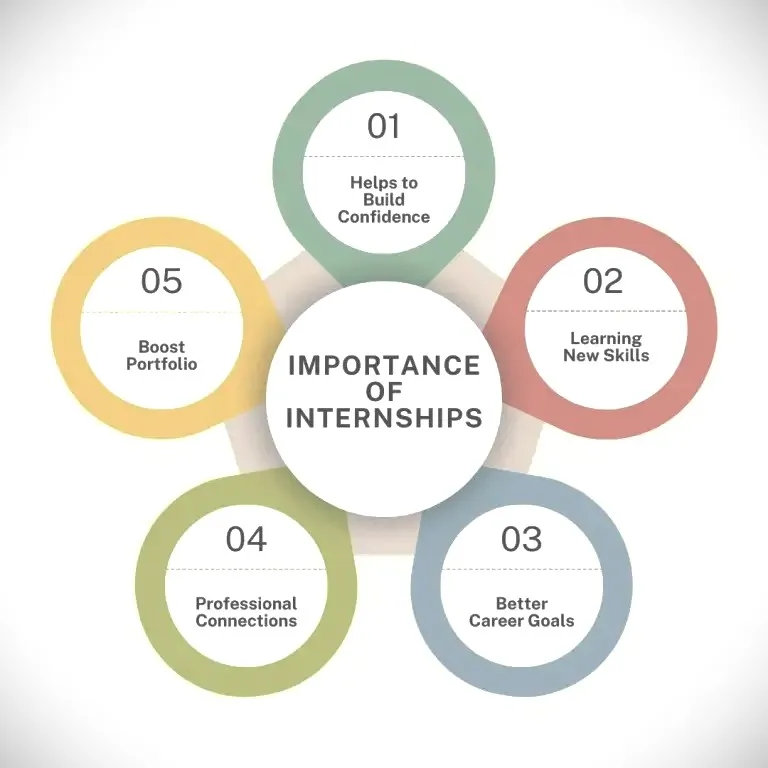
Advantages of Internships
Internships have their own benefits, especially if you are still figuring out what to do in your career.
1. Exposure to the industry
You get a chance to see how professionals work. For many students, this is the first real experience outside college.
2. Improves your resume
Companies prefer candidates who have basic workplace exposure. An internship shows that you have stepped out of the classroom and tried to learn something new.
3. Helps in career decisions
If you are confused about your field, an internship gives clarity. For example, if you intern in digital marketing and don’t enjoy it, you know you should not build your career there.
4. Networking opportunities
You meet seniors and mentors. Sometimes a simple conversation with a professional can open new opportunities.
Limitations of Internships
While internships are valuable, they are not always enough to make you job-ready.
1. Limited technical learning
Most interns get small tasks like data entry, documentation, research, or assisting a senior. You may not learn deep skills that companies expect.
2. Unstructured training
An internship is not a classroom. Companies expect you to learn on your own. There is no fixed teaching plan, no complete guidance, and no proper evaluation of your skills.
3. No guarantee of job
Very few internships convert into full-time jobs. Many companies hire interns only for temporary help.
4. Short duration
An internship usually lasts for a few weeks or months. It provides exposure, but not mastery.
Because of these limitations, students often complete internships but still feel unsure about job interviews.
Understanding Job-Ready Training Programs
Job-ready training programs are becoming popular because they solve a very big problem: graduates do not have practical skills. Many companies say they spend time and money to retrain new hires. This is why skill-based training programs are now in high demand.
What Job-Ready Training Includes
A job-ready training program focuses on skills that are directly required in the industry. The training is structured, goal-oriented, and run by mentors who guide you step by step.
Here is what such programs generally include:
1. Hands-on learning
You work on real projects instead of only listening to theory.
2. Skill-based modules
Training is divided into modules such as programming, digital marketing, data analysis, or full stack development.
3. Live practice and assignments
You get practical tasks that replicate industry work.
4. Portfolio building
You create real work samples that you can show to interviewers.
5. Placement-focused training
Resume building, interview preparation, and mock interviews are usually included.
6. Mentor support
You get continuous guidance from industry trainers.
Advantages of Job-Ready Training for Students
For final-year and graduate students, job-ready training has clear benefits:
1. You learn practical skills
You work with tools, technologies, and methods used in actual companies.
2. You become confident for interviews
You don’t just know the answer; you can explain it with examples from your projects.
3. You earn strong portfolio projects
Instead of saying “I know this subject,” you can say “I built this project using these skills.”
4. Better job opportunities
Companies prefer candidates who are already skilled. It reduces their training cost and boosts productivity.
5. Faster career growth
When you join a job with practical knowledge, you perform better and get noticed early.
Why Job-Ready Programs Are Growing Popular
The job market is changing fast. Companies want freshers who can start working without long training periods. Students also want quick results: they want a job, a good salary, and long-term stability.
Job-ready programs match this need because:
They are focused on real-world learning.
They cover the latest technologies.
They prepare you for interviews.
They connect learning with employability.
This is why many students prefer job-ready training over theoretical internships.
Internship vs Job-Ready Training – A Clear Comparison
To help you understand better, here is a simple comparison:
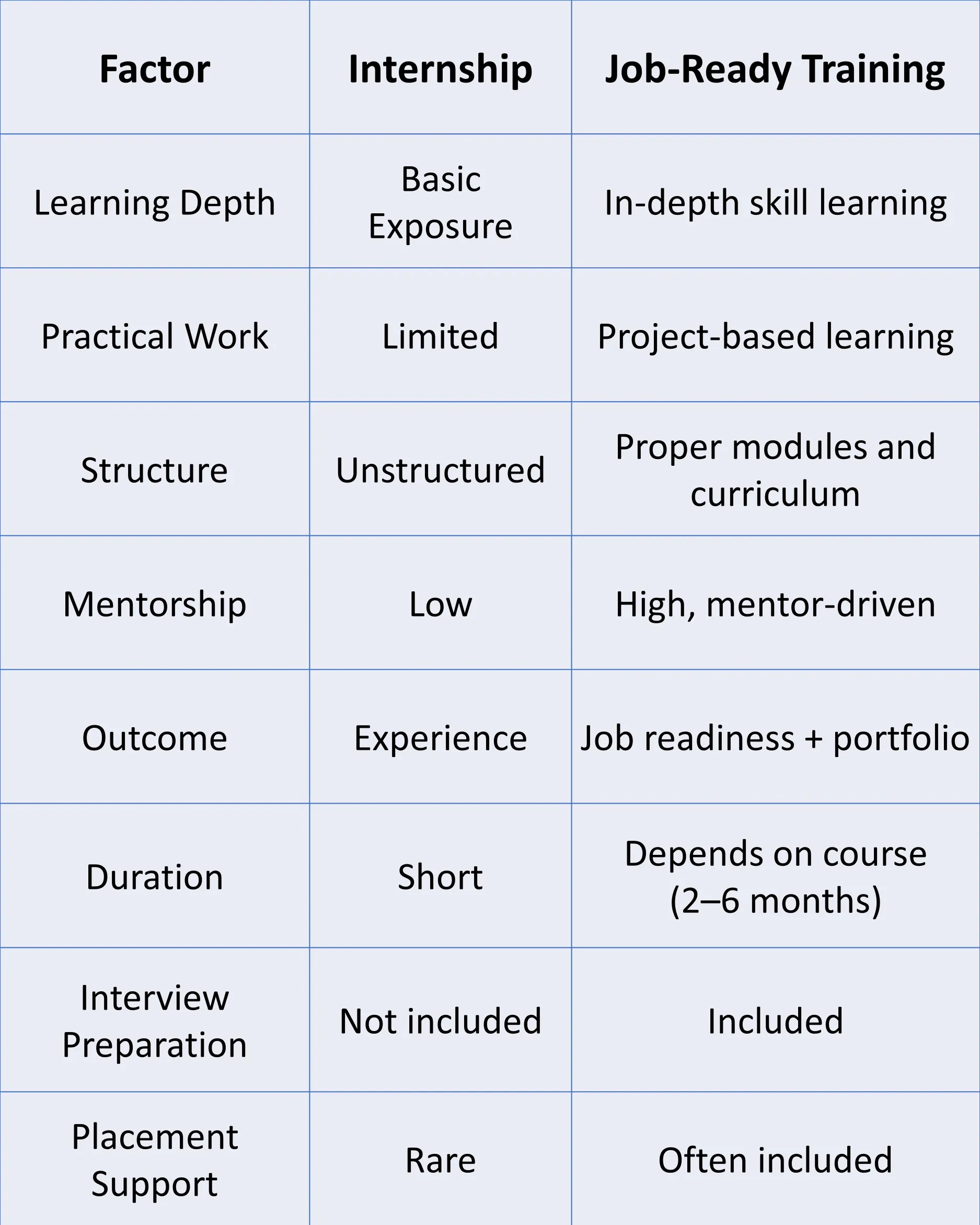
Conclusion:
If you want basic exposure, internships are helpful.
If you want strong skills and real job readiness, structured training is much more effective.
Which Option Should Students Choose?
Choose Internship If…
You are in the early years of college.
You want to explore different fields.
You want to understand work culture.
You need exposure before picking a career path.
Choose Job-Ready Training If…
You are in final year or recently graduated.
You want a job quickly.
You want strong technical or practical skills.
You want clarity about career direction.
You want structured learning with mentor guidance.
Many students try multiple internships but still struggle in placements. The issue is not hard work; the issue is the lack of specific, deep, real-world skills. If you want to perform well in job interviews and start your career confidently, job-ready training gives you a bigger advantage.