Home » Artificial Intelligence » Why R&D-Driven Learning Is the Future of AI Careers

Why a Research & Development–Driven Learning Program Is the Future of Careers in the AI Era

Research and development based learning in the AI era

The way people learn has changed permanently.

Today, students and professionals have access to AI tools, online tutorials, free courses, open-source repositories, and global knowledge platforms. Information is everywhere. Anyone with an internet connection can learn almost anything.

Yet, despite this abundance, a large number of learners still struggle to build real skills, perform confidently in jobs, or grow meaningfully in their careers.

This leads to a critical question.

If information is no longer scarce, why are so many learners still not industry-ready?

The answer does not lie in effort alone. It lies in how learning is structured.

The future belongs to learners who think, build, and adapt. Choose learning that prepares you for real work, not just exams

The Core Problem With Traditional Teaching Models

Traditional education systems were designed for a very different era. Their structure still revolves around:

  • Fixed and slow-changing syllabi

  • Lecture-based teaching

  • Heavy focus on theory

  • Exams and marks instead of outcomes

While this approach may help students pass tests, it fails to prepare them for real professional environments.

In the real world, professionals are expected to:

  • Think independently

  • Solve open-ended problems

  • Make decisions under uncertainty

  • Use tools, including AI, responsibly

  • Adapt continuously as technology evolves

No company hires someone because they completed a syllabus. Companies hire people who can build, analyze, improve, and deliver results.

This gap between education and industry expectations has widened significantly, especially in the AI era.

What the AI Era Has Really Changed in Learning

There is a popular misconception today that AI will replace learning. This belief is misleading.

AI has not eliminated the need for skills. It has changed what needs to be learned and how learning should happen.

  • AI can generate code, but it cannot understand business context.
  • AI can suggest ideas, but it cannot take responsibility.
  • AI can assist decisions, but it cannot own outcomes.

Learners who rely blindly on AI without understanding fundamentals become dependent and fragile. When tools fail, they fail.

On the other hand, learners who understand concepts deeply and use AI as an assistant become more productive, confident, and valuable.

This shift demands a different learning approach. One that develops thinking ability, judgment, and ownership, not just tool usage.

This is where a Research & Development–driven learning model becomes essential.
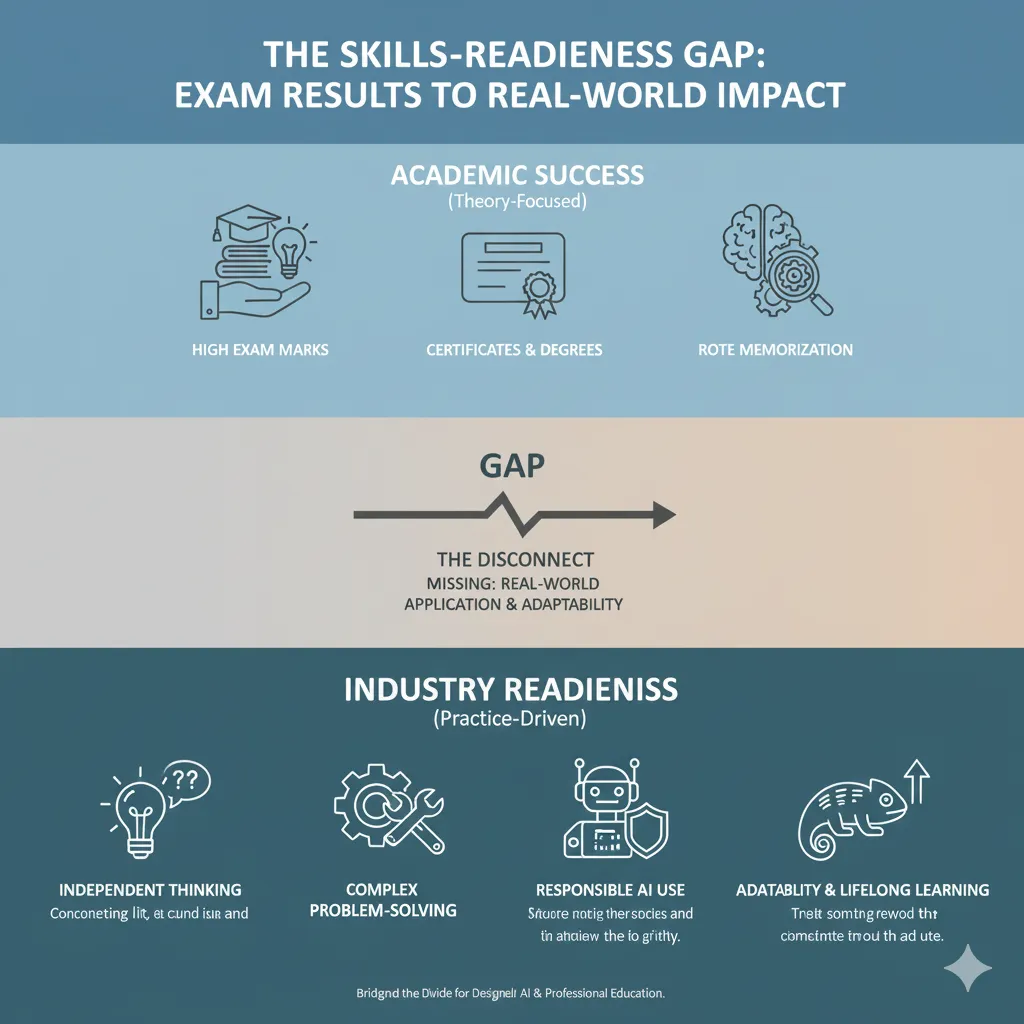
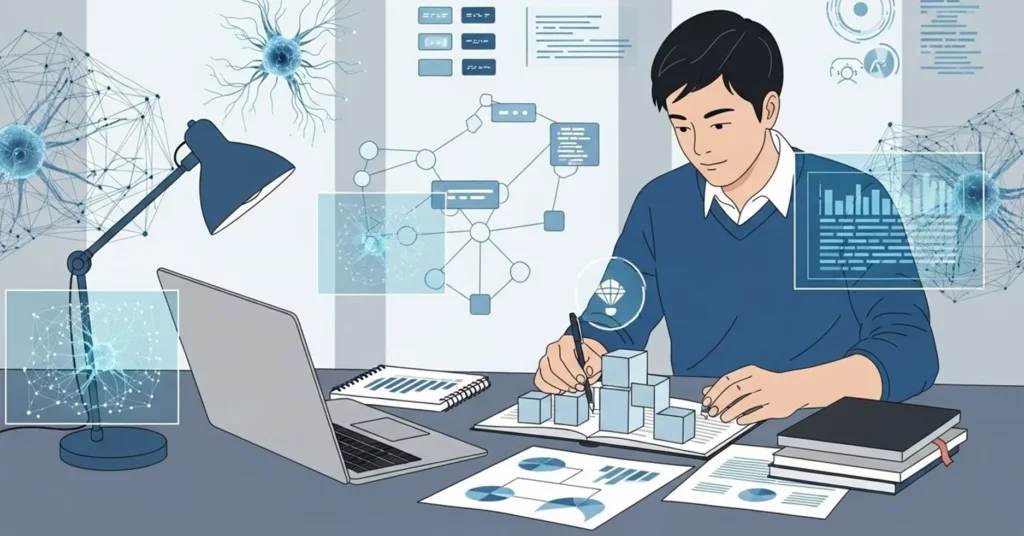
Infographic showing how exam-based education creates a gap between marks and real-world skills

In the AI era, skills matter more than certificates. Learn how professionals think, solve, and grow

Why Skill Development Now Requires a Research Mindset

Modern careers are no longer about following instructions. They are about navigating uncertainty.

Professionals today do not ask:
“What topic comes next in the syllabus?”

They ask:

  • Why is this problem important?

  • What are the possible approaches?

  • What trade-offs am I making?

  • What happens if this solution fails?

  • How can this be improved further?

This is not academic thinking. This is professional thinking.

A research mindset teaches learners to explore problems deeply, evaluate alternatives, test assumptions, and refine solutions. These are the exact skills required in AI-driven roles, where answers are rarely fixed and conditions change rapidly.

What Is a Research & Development–Driven Learning Program?

A Research & Development (R&D) learning program is not a traditional course.

It is a guided professional environment where learners work on real problems instead of predefined exercises.

Such programs focus on:

  • Understanding real-world problems

  • Researching possible solutions

  • Designing and implementing systems

  • Reviewing outcomes critically

  • Improving solutions through iteration

Instead of consuming information passively, learners actively create knowledge through application.

The learning cycle typically follows:
research → build → review → improve

This mirrors how work happens in real companies, startups, and research teams.

Why R&D-Driven Learning Is More Relevant Than Ever in India

The Indian job market has evolved rapidly over the last decade.

Degrees and certificates alone no longer guarantee employability or growth. Employers increasingly value:

  • Practical exposure

  • Ownership of projects

  • Problem-solving ability

  • Communication and collaboration

  • Adaptability to tools and technology

Many graduates struggle not because they lack intelligence, but because they lack exposure to real work environments.

A Research & Development learning model addresses this gap directly. It allows learners to experience professional thinking, expectations, and accountability before entering the industry.

Instead of memorizing answers, learners develop capability and confidence.

Stop preparing only for marks. Start preparing for a career that evolves with technology

Who Should Choose a Research & Development Learning Program?

This learning model is not designed for everyone. It is meant for serious learners who want long-term growth.

It is ideal for:

  • College students who want real skills, not just marks

  • Fresh graduates confused about career direction

  • Working professionals planning to upskill or switch roles

  • Entrepreneurs and founders who want to build real products

  • Learners tired of shallow, surface-level courses

What matters most is not background, degree, or prior experience. What matters is attitude.

Core Requirements to Succeed in an R&D Learning Environment

Before joining an R&D-driven program, learners must understand the expectations clearly.

Strong Learning and Growth Mindset

This model requires curiosity, patience, and consistency. There are no shortcuts or instant results.

Willingness to Experiment and Fail

Mistakes are part of the process. Learners must be comfortable with trial, error, and iteration.

Time Commitment and Focus

This is not passive learning. Active participation and deep engagement are mandatory.

Openness to Feedback

Mentors will review work critically. Feedback is meant to improve thinking, not comfort ego.

Ownership of Work

Learners are responsible for their progress, documentation, and outcomes. Accountability is non-negotiable.
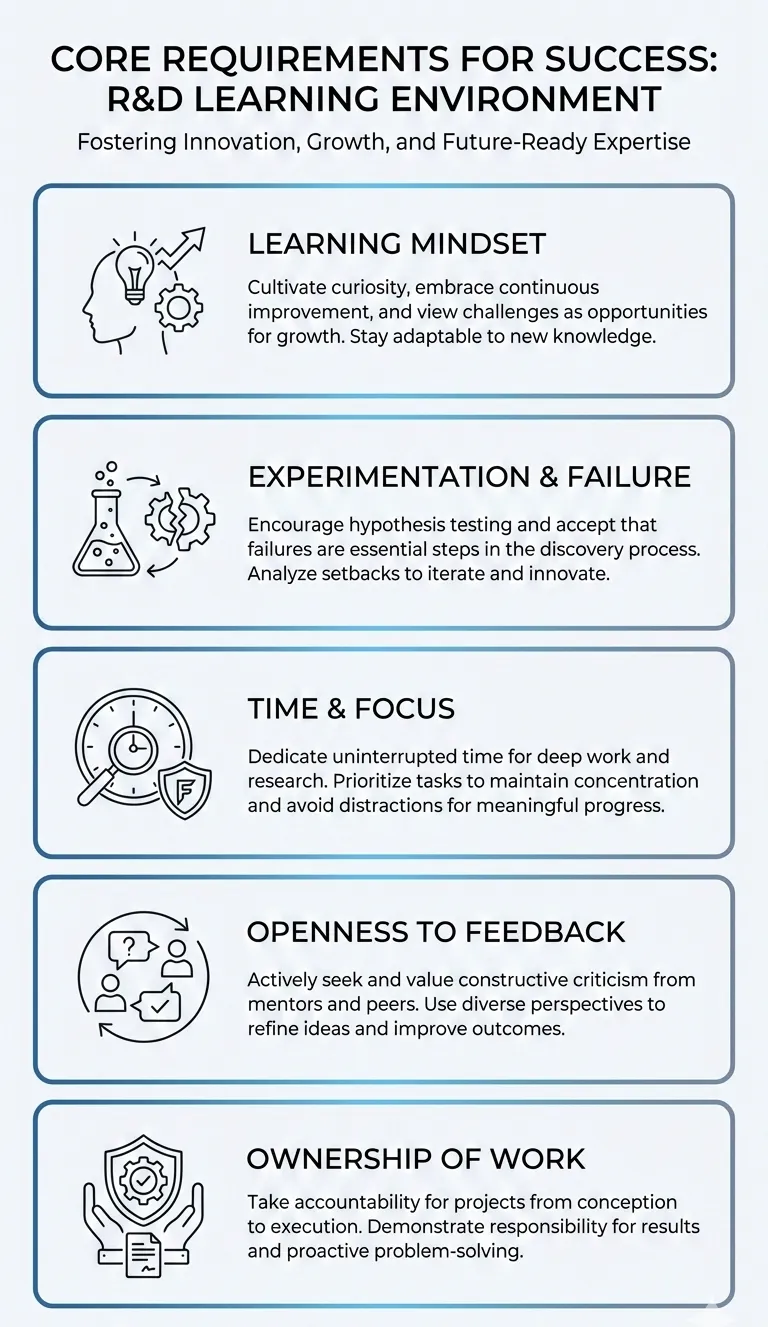
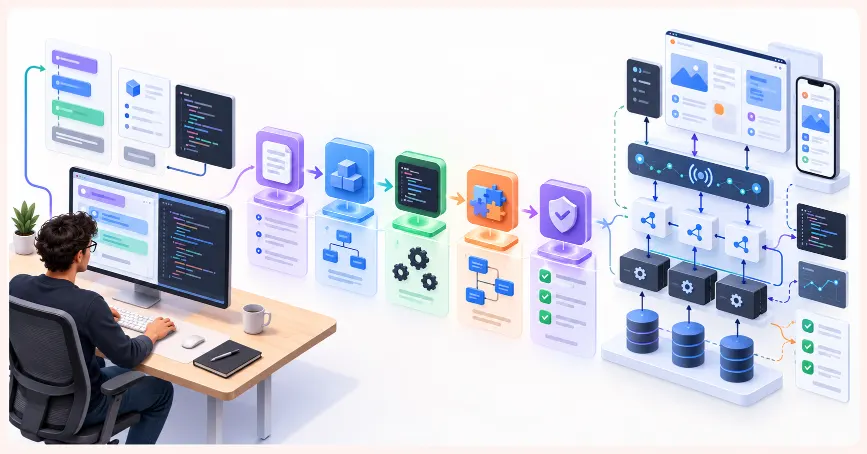
Key skills needed to succeed in a research and development learning program

The Role of Mentors in an R&D-Driven Learning Program

Mentorship is the backbone of any successful R&D learning environment.

Mentors do not provide ready-made answers. Instead, they:

  • Ask the right questions

  • Challenge assumptions

  • Review implementations deeply

  • Share real industry perspectives

  • Guide learners toward professional thinking

This form of guidance accelerates growth far more effectively than self-learning or video-based courses.

AI tools can assist learning, but mentorship shapes judgment.

How R&D-Driven Learning Prepares You for Real Industry Roles

Learners graduating from R&D-based programs develop qualities that employers value deeply:

  • Confidence to work independently

  • Strong analytical and problem-solving skills

  • Real project and implementation experience

  • Clear communication and collaboration ability

  • Readiness for interviews, jobs, and leadership roles

Most importantly, they learn how to learn continuously, which is the most critical skill in an AI-powered world.

They are not afraid of new tools or technologies because they understand fundamentals and adaptation.

Breaking Free From the Limitations of Traditional Education

Traditional education often restricts creativity and exploration. Learners are told what to study, how to study, and when to stop.

An R&D learning model does the opposite.

It encourages:

  • Exploration over memorization

  • Depth over speed

  • Thinking over copying

  • Growth over grades

This environment naturally builds innovators, problem solvers, and leaders.

Who This Model Is Not Meant For

An R&D-driven learning program is not suitable for learners who want:

  • Quick certificates

  • Shortcut-based success

  • Passive learning experiences

  • Minimal effort with maximum reward

Clarity before joining is essential. This model demands commitment and seriousness.

A Message to Serious Learners in the AI Era

If your goal is long-term career growth, confidence, and relevance, then how you learn matters more than what you learn.

The AI era rewards those who can think independently, build responsibly, and adapt intelligently.

A Research & Development–driven learning environment helps you develop these abilities in a structured and guided way.
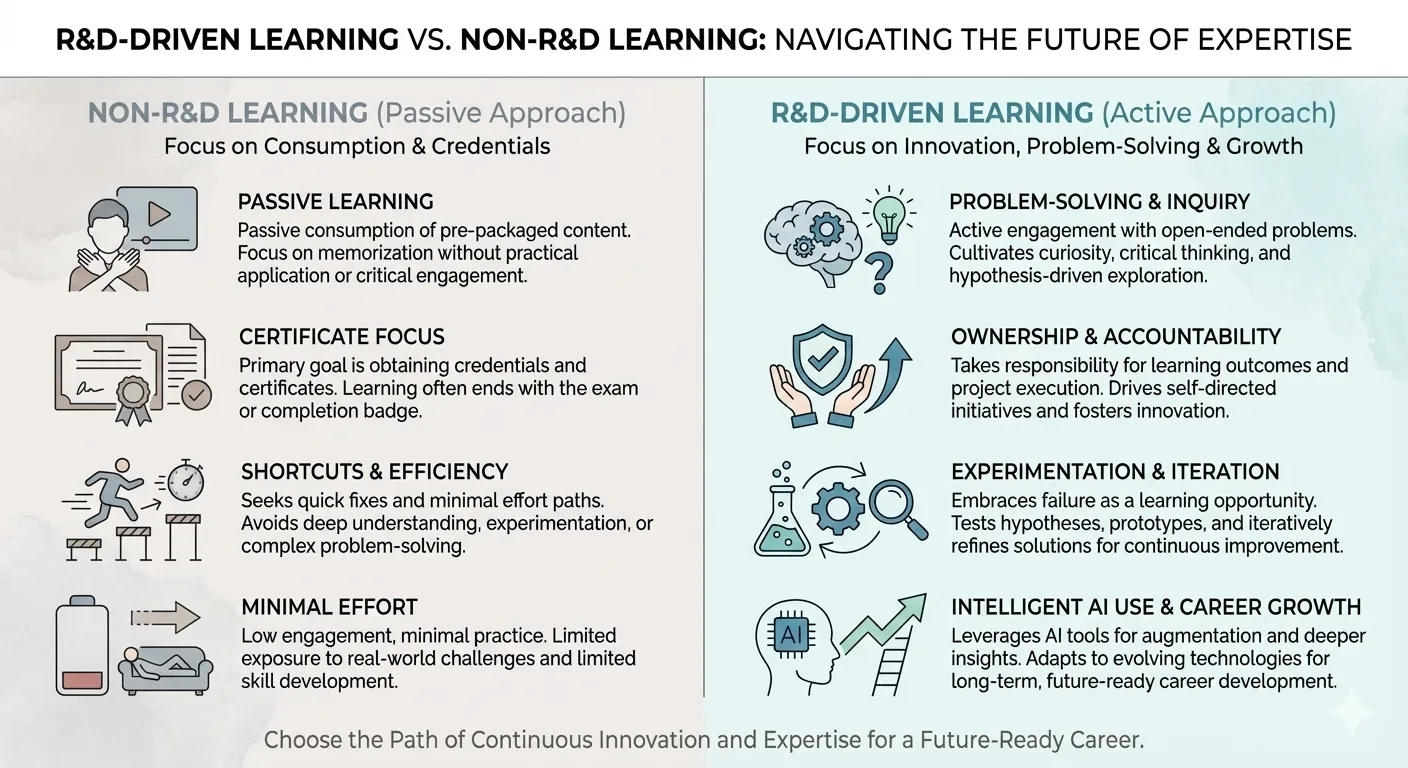
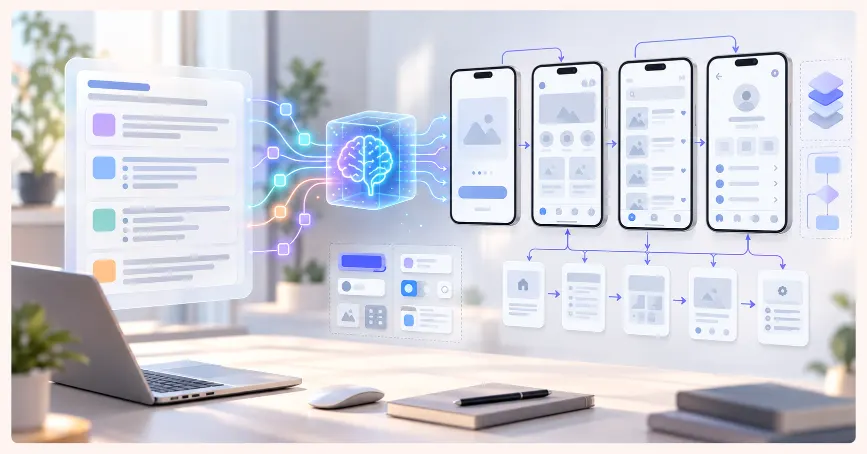
Infographic showing how traditional exam-based education creates a gap between marks and industry skills

Final Thoughts: The Future Belongs to R&D-Driven Learners

The future of work does not belong to those who memorize the most content. It belongs to those who can think, build, and evolve.

In an AI-powered world, professionals who understand systems deeply and work intelligently with technology will always stay ahead.

A Research & Development–driven learning program is not just an alternative to traditional education. It is a necessary evolution.

For learners ready to move beyond lectures and step into real professional growth, this model marks the beginning of a different journey.

FAQs: Research & Development–Driven Learning Programs

Q1. What is a Research & Development–driven learning program?

It is a learning model focused on solving real problems through research, implementation, review, and continuous improvement rather than syllabus-based teaching.

Q2. How is R&D-based learning different from traditional courses?

Traditional courses focus on lectures and exams. R&D-based learning focuses on real-world problem-solving, projects, and professional thinking.

Q3. Is an R&D learning program suitable for beginners?

Yes, if the learner has a strong mindset and willingness to learn. Background matters less than attitude and commitment.

Q4. Can AI tools replace R&D-based learning?

No. AI can assist learning, but it cannot replace critical thinking, judgment, and real-world decision-making.

Q5. Does R&D-based learning help in getting jobs?

Yes. It builds practical skills, confidence, and project experience, which employers value more than certificates.

Q6. How much time commitment does an R&D learning program require?

It requires consistent time and focus. It is not designed for passive or casual learning.

Q7. Is this model useful for working professionals?

Absolutely. It is especially valuable for professionals planning to upskill, switch roles, or move into leadership positions.

Q8. Why is R&D-driven learning important in the AI era?

Because AI increases complexity. Professionals must understand systems deeply and adapt continuously to remain relevant.

Leave a Reply

Your email address will not be published. Required fields are marked *