

Importance of Mentorship in Education
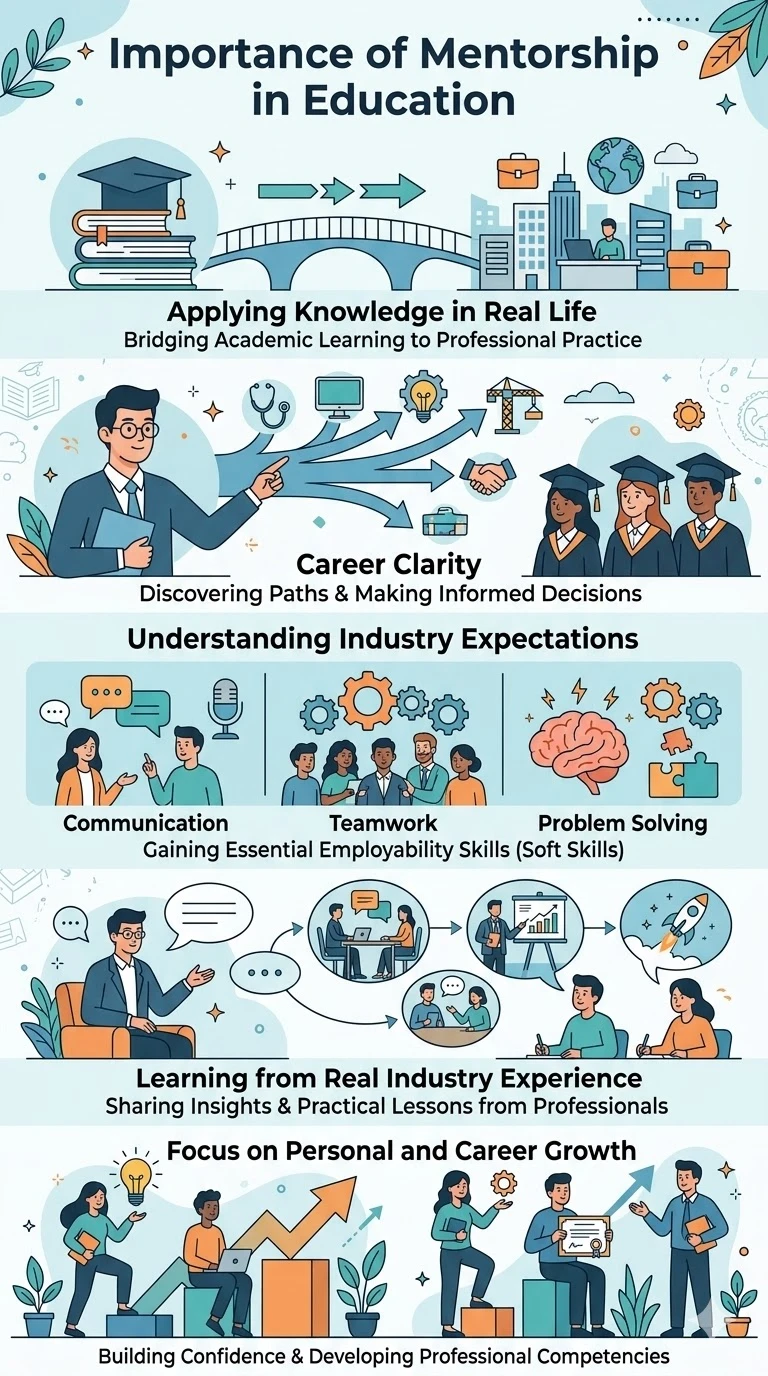
Education provides knowledge, but mentorship helps students understand how to apply that knowledge in real life. Many students focus on exams, assignments, and grades. However, career success depends on more than academic performance.
Mentorship in education helps students gain clarity about their future. A mentor helps learners understand different career options and identify their strengths. This guidance becomes especially important when students feel confused about their next steps.
Mentors also help students understand industry expectations. Many employers expect graduates to possess communication skills, problem-solving ability, teamwork, and professional behavior. Students often do not develop these skills through traditional classroom learning.
Through mentorship, students learn how to develop these abilities. Mentors share real industry experiences and guide students in improving their professional mindset.
Mentorship also encourages students to take responsibility for their growth. When learners receive regular guidance and feedback, they become more focused on their career development.
Mentorship for Career Development
Mentorship plays a powerful role in career development. Many students struggle to decide which field they should pursue. Some follow trends without understanding their own interests or strengths.
A mentor helps students explore different career paths. With proper guidance, learners can identify the skills required for their desired profession. This clarity allows them to focus on the right learning opportunities.
Mentors also guide students in building long-term career plans. Instead of thinking only about the first job, mentors encourage learners to develop a roadmap for continuous growth.
For example, a student interested in technology may learn about different areas such as web development, data science, cloud computing, or cybersecurity. A mentor can explain the requirements of each field and help the student choose the most suitable path.
This type of guidance helps students avoid confusion and move toward meaningful career goals.
Student Mentorship Programs
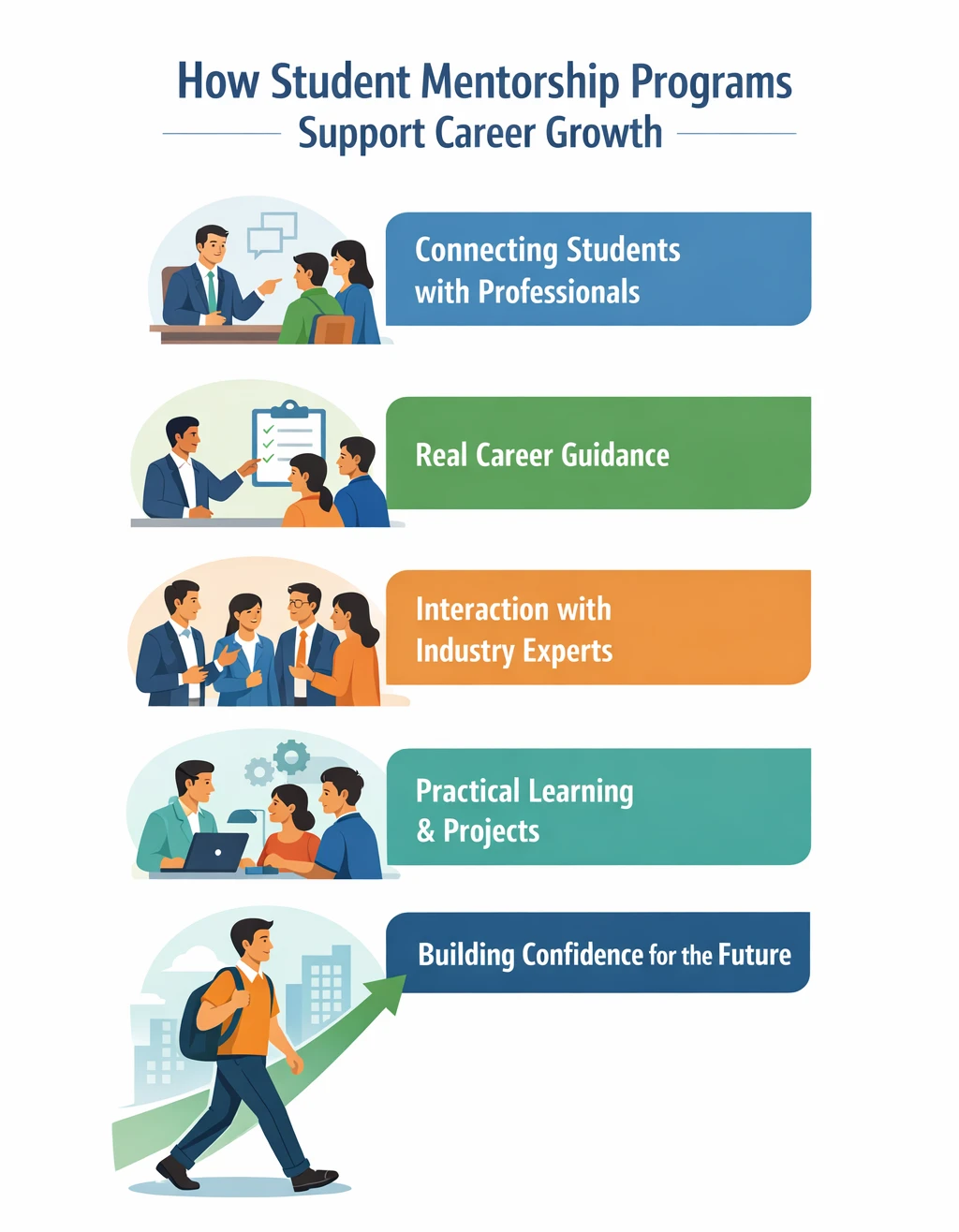
Student mentorship programs are becoming increasingly important in modern education systems. These programs connect learners with experienced professionals who can guide them during their academic and professional journey.
A well-designed mentorship program supports students in several ways. First, mentors provide career advice based on real experience. Students gain insights that are rarely available in textbooks or lectures.
Second, mentorship programs create opportunities for regular interaction between students and professionals. These conversations help learners understand workplace expectations and industry trends.
Third, mentors encourage students to work on practical tasks and projects. When students apply their knowledge in real situations, they develop stronger problem-solving skills.
Many successful institutions and organizations have started implementing mentorship programs. These programs create a supportive environment where students can ask questions, seek guidance, and learn from experienced professionals.
When mentorship becomes part of the learning ecosystem, students feel more confident about their future.
Industry Mentorship for Students
Industry mentorship connects students with professionals who actively work in their respective fields. This type of mentorship is extremely valuable because students gain real insights into industry practices.
Many graduates face difficulties during job interviews because they lack practical understanding of workplace situations. Industry mentors help students bridge this gap by sharing their real experiences.
Mentors often explain how companies operate, how teams collaborate, and how professionals solve complex problems. These insights help students develop a deeper understanding of their chosen field.
Industry mentors also guide students in developing professional behavior. They explain the importance of communication, time management, teamwork, and ethical conduct.
Students who receive industry mentorship often feel more prepared for the job market. They gain confidence because they understand how the professional world works.
This type of mentorship also allows students to build meaningful professional relationships. These connections can open doors to internships, training opportunities, and job referrals.
Mentorship and Skill Development
Skill development plays a crucial role in employability. Employers today look for candidates who possess both technical knowledge and practical skills.
Mentorship supports skill development by providing personalized guidance. Instead of learning randomly, students follow structured learning paths recommended by experienced mentors.
Mentors help learners identify the most important skills required in their chosen profession. For example, a mentor in the technology sector may encourage students to focus on practical programming projects, teamwork, and problem-solving exercises.
Mentorship also helps students build soft skills that are essential for professional success. These include communication skills, leadership ability, adaptability, and critical thinking.
Another important benefit of mentorship is accountability. When students regularly interact with mentors, they feel motivated to complete tasks and improve their performance.
Mentors often provide constructive feedback, which helps learners recognize their strengths and areas for improvement. This continuous improvement process supports long-term career growth.
Mentorship for Professional Growth
Mentorship does not only help students secure their first job. It also supports long-term professional growth. Many professionals continue to seek mentorship even after entering the workforce.
A mentor helps individuals navigate complex career decisions. For example, professionals may need guidance when switching roles, learning new technologies, or moving into leadership positions.
Mentorship also encourages lifelong learning. As industries evolve, professionals must continuously update their skills. Mentors often recommend new learning opportunities and emerging technologies.
In addition, mentorship helps individuals build professional confidence. When people receive guidance from experienced professionals, they feel more prepared to handle challenges and responsibilities.
Mentorship also strengthens networking opportunities. Through mentors, learners often gain access to broader professional communities and industry networks.
These connections can play an important role in career advancement.
Bridging Education and Employment Gap
One of the biggest challenges in India today is the gap between education and employment. Many graduates complete their degrees but remain uncertain about how to apply their knowledge in professional environments.
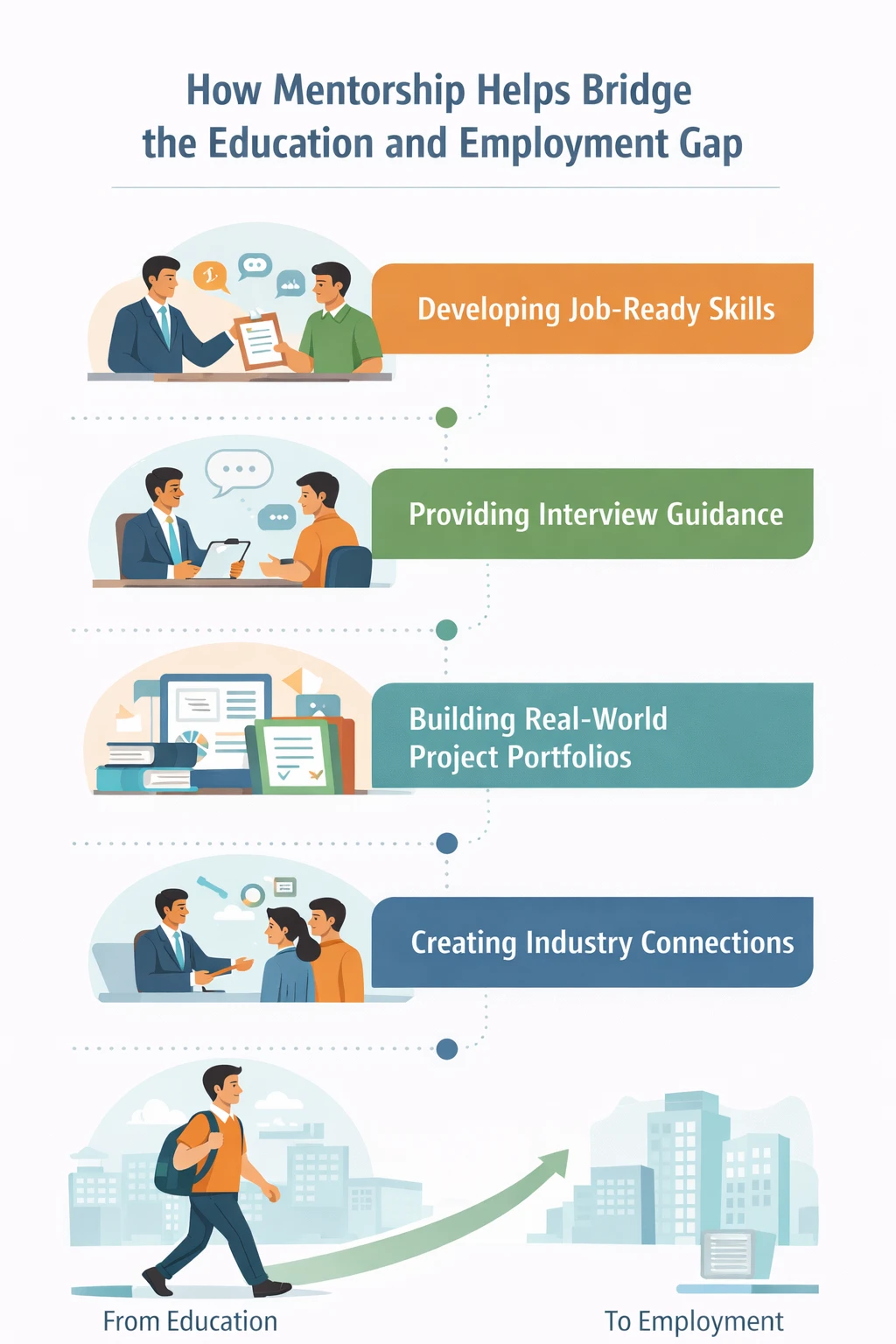
Mentorship plays a crucial role in bridging this gap. Mentors guide students in understanding industry expectations and preparing for real workplace situations.
For example, many students wonder how mentorship helps students get jobs. Mentors often guide learners in building strong resumes, preparing for interviews, and developing practical project portfolios. These elements significantly improve job readiness.
Another important question many learners ask is why mentorship is important for students in India. Many students, especially from smaller cities, do not have access to professional networks or career guidance. Mentorship provides them with direction and exposure.
Mentorship also helps students understand how mentorship improves employability skills. Through regular guidance and practical activities, learners develop problem-solving ability, communication skills, and professional confidence.
Students who receive mentorship often gain a clearer understanding of how mentors help students become job ready. Mentors guide them through project-based learning, skill development, and real-world problem-solving tasks.
This process allows learners to move smoothly from academic learning to professional employment.
Mentorship for Job Readiness
Job readiness requires more than technical knowledge. Employers expect candidates to demonstrate professionalism, adaptability, and teamwork.
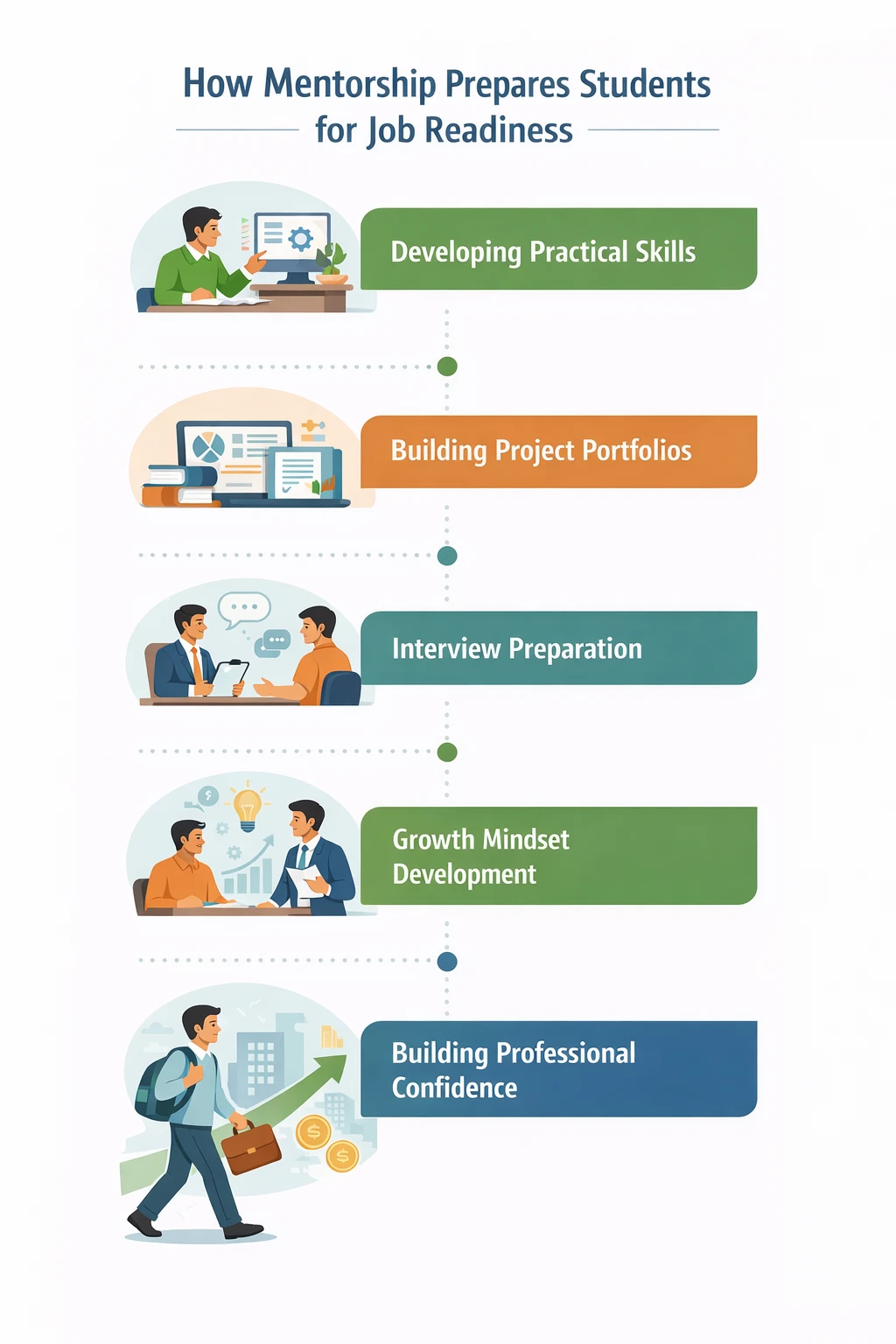
Mentorship plays a key role in preparing students for these expectations. Mentors help students develop practical skills that are necessary in professional environments.
For example, mentors often guide students in creating project portfolios that demonstrate their abilities. These portfolios allow employers to see real examples of a candidate’s work.
Mentors also help students prepare for job interviews. Through mock interviews and feedback sessions, learners improve their communication and presentation skills.
Mentorship also encourages students to develop a growth mindset. Instead of fearing failure, students learn to treat challenges as opportunities for learning.
When students receive proper mentorship, they become more confident in their abilities. This confidence helps them perform better during interviews and workplace interactions.
Mentorship in Higher Education
Higher education institutions play an important role in promoting mentorship. Universities and colleges can create mentorship programs that connect students with industry professionals and experienced alumni.
These initiatives help students gain exposure to real-world experiences. Mentors can share valuable insights about career opportunities, industry expectations, and emerging trends.
Mentorship programs also encourage collaboration between academia and industry. When professionals actively participate in mentoring students, educational institutions become more aligned with industry needs.
This collaboration can significantly improve the employability of graduates.