Home » Career » How to Use Naukri, LinkedIn and Job Portals Effectively to Get More Interview Calls

How to use Naukri, LinkedIn, and other job portals effectively (most students are using them incorrectly)

Indian job seeker using online job portals to search and apply for career opportunities

You are on all the right platforms. So why are you getting no calls

Most freshers in India have a Naukri profile, a LinkedIn account, and profiles on Internshala or Shine. They check these platforms regularly, apply to roles that look relevant, and then wait.

And wait.

The silence is not because opportunities are not there. India’s job market in technology, digital marketing, data analytics, and business development is growing — demand for skilled professionals has never been higher.

The silence is because most students are using these platforms in exactly the wrong way. They treat job portals like a lottery — apply to as many roles as possible, see what comes back, and repeat. That approach worked in a less competitive era. In 2025, with hundreds of applications hitting every decent listing within hours of it going live, it produces almost nothing.

This blog breaks down how each major platform actually works, what most students do wrong, and what the approach looks like that consistently produces calls — not silence.

Learn2Earn Labs AI Integrated Digital Marketing Training banner featuring AI-powered marketing skills, SEO, Google Ads, social media marketing, analytics, automation, practical projects, internship experience, and career-focused learning.

AI Integrated Digital Marketing Training

Build practical skills in SEO, Google Ads, Social Media Marketing, Analytics, Content Marketing, and AI-powered workflows through projects, live classes, internship exposure, and industry-focused learning.

Understanding what job portals actually are

Naukri, LinkedIn, Internshala, and similar platforms are not just job boards where you submit applications. They are search engines and databases that employers use to find candidates.

When a recruiter opens Naukri or LinkedIn, they are not scrolling through every application received. They are running searches — filtering by skill tags, location, experience level, and keywords. The candidates discovered through that search are the ones who get calls. Most applications submitted through the “Apply” button are reviewed later, if at all.

Your profile is not a passive document. It is a live searchable asset that either surfaces in the right searches or does not — entirely based on how well it is built.

The candidates getting consistent calls are not the ones applying most. They are the ones whose profiles are optimised to appear in the searches recruiters are actually running.
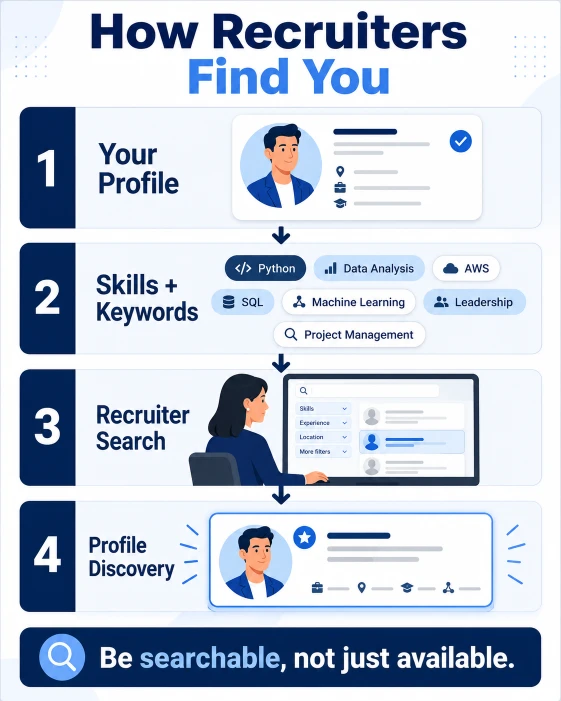
Infographic explaining how recruiters search and discover candidates on online job portals

Naukri: what most students get completely wrong

Naukri is India’s largest job portal with over 70 million registered candidates. That number should tell you something important: you are competing for recruiter attention in an extraordinarily crowded database.

The profile completeness problem

Naukri assigns a “profile strength” score and uses it as part of its ranking algorithm. A low completeness score means a lower ranking in recruiter searches — shown less often, regardless of how relevant the candidate is. Most freshers fill in the basics and stop. A fully completed profile — professional headline, detailed summary, complete education, project details, and precisely tagged skills — ranks significantly higher.

The skills section is a search filter, not a list

Every skill you add to your Naukri profile is a tag that recruiters can filter by. A developer who has not added “React.js,” “Node.js,” and “MongoDB” as distinct, specific skills will not appear when a recruiter filters for those tools — even if those technologies are mentioned in their job description text. Add every relevant, specific skill. Use the exact name the industry uses, not your own description of it.

Resume uploads are not enough

Many students upload a PDF resume and assume their Naukri profile is complete. It is not. The resume is not indexed in the same way as the profile fields. Fill every section of the profile explicitly — do not rely on the resume to carry information that should be in the profile fields.

The “Resume Booster” feature is underused

Naukri allows candidates to boost their resume to the top of recruiter search results for a limited period. This is particularly useful in the 30 to 45 days before a serious job search push. Use it strategically — not constantly, but when you are actively pursuing a specific type of role.

Apply with a tailored resume, not a generic one

Before applying to any role, read the job description carefully, identify the three to five most important requirements, and make sure those appear prominently in your resume. A resume that mirrors the language of a job description performs significantly better in both ATS screening and recruiter review.
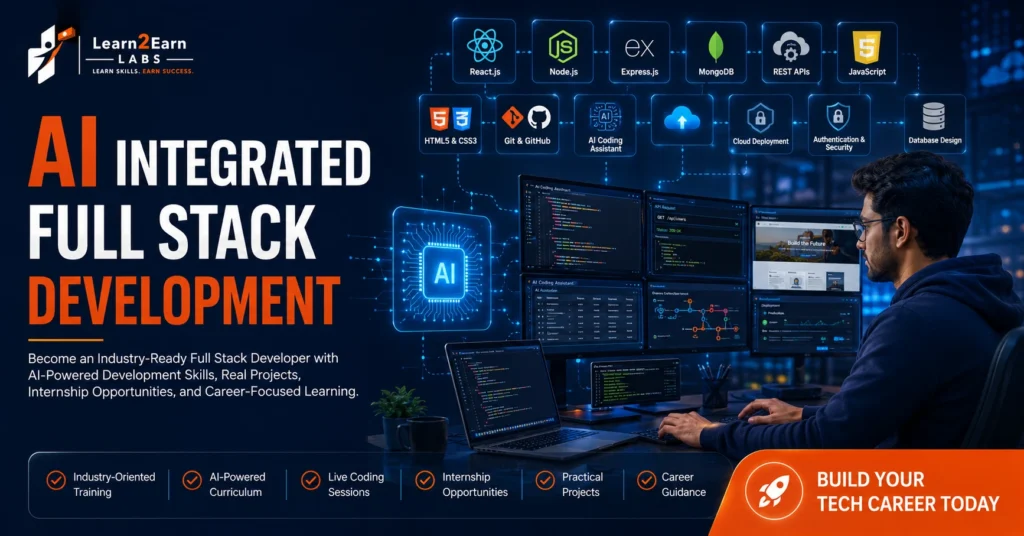
AI Integrated Full Stack Development training with React Node.js MongoDB and AI tools at Learn2Earn Labs

AI Integrated Full Stack Development Training

Master HTML, CSS, JavaScript, React, Node.js, Express.js, MongoDB, REST APIs, and AI-powered development workflows through live coding, practical projects, internship opportunities, and career-focused training.

LinkedIn: the platform most students treat like a social media page

LinkedIn is the most powerful professional networking and job search platform available to students and freshers in India right now — and it is being dramatically underused by the vast majority of people on it.

Your profile is not your resume

The biggest mistake students make on LinkedIn is treating it as a place to paste their CV. LinkedIn is a searchable, social, trust-building platform. A profile that reads like a dry resume misses the entire point.

Your headline is searchable. “Student at XYZ University” will not appear in a single recruiter search. “Full Stack Developer | React.js | Node.js | MongoDB | Open to Opportunities” appears every time a recruiter searches for those skills. This single change is one of the highest-return actions you can take in under two minutes.

The Open to Work feature is not optional

LinkedIn allows you to signal to recruiters — either publicly or only to recruiters — that you are open to opportunities. The “Open to Work” feature, when activated with a specific job title and location preference, dramatically increases the number of times your profile surfaces in recruiter searches. Most freshers either do not know it exists or do not activate it specifically enough to be useful.

Connections directly affect your visibility

LinkedIn surfaces profiles to recruiters based partly on network proximity — second and third-degree connections rank higher than complete strangers. Connect with intention: college alumni, trainers, professionals at target companies, and recruiters at organisations you want to join.

Content activity increases discoverability

A profile with recent posts, comments, or shares is shown more often in search results than an identical but inactive one. Two to three meaningful interactions per week — a comment on an industry article, a short post about something you built — keeps your profile alive without significant time investment.

Direct outreach is underused

Most freshers wait to be found. Students who get the most traction also initiate — finding recruiters and hiring managers at target companies and sending personalised connection requests. Not a request for a job — a genuine professional introduction with a specific reason for connecting. This consistently produces conversations that applications never would.

Internshala, Shine, and other platforms: when to use them and how

Internshala is particularly valuable for freshers seeking internships and entry-level roles in digital marketing, content, social media, and business development. It is less competitive than Naukri at the fresher level and has a high concentration of roles designed for students with no prior experience. Apply with a role-specific resume and a tailored cover letter — Internshala allows cover letters and most candidates skip them, making a well-written one stand out immediately.

Shine functions similarly to Naukri and should be treated with the same optimisation approach — complete profile, specific skill tags, and tailored applications. It has a different recruiter base, meaning some companies that list on Shine do not list on Naukri and vice versa. Maintaining an optimised profile on both increases the total search surface you are visible in.

AngelList (now Wellfound) is designed for startup hiring and is one of the most underused platforms among Indian freshers. Companies here typically care far more about demonstrated ability than academic background. A strong project portfolio can open conversations with companies that would never appear on traditional portals.

GitHub, Behance, and domain-specific portfolios are not job portals in the traditional sense, but they are increasingly part of the recruiter search process for technical and creative roles. A GitHub profile with active repositories, clean code, and clear README files is often checked by technical recruiters before a call is made. For developers, maintaining an active GitHub presence is effectively a form of job portal optimisation.

The approach that actually produces results

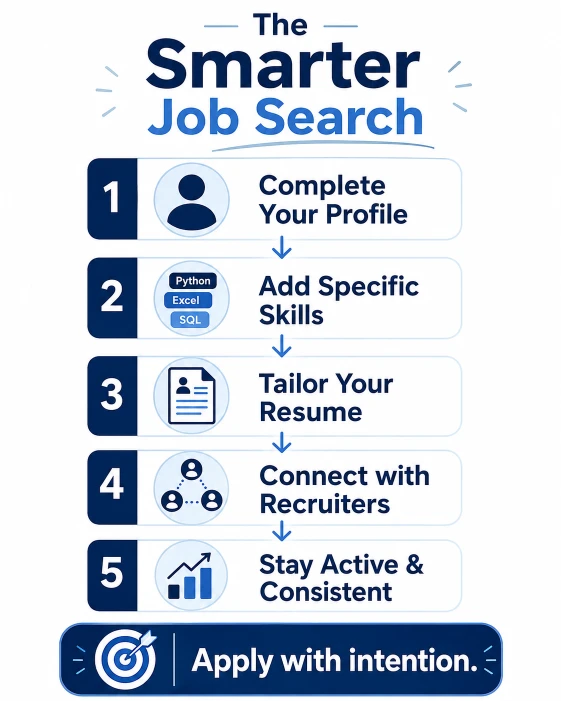
The students who consistently get calls have built complete, keyword-rich profiles that are actively maintained — not created once and forgotten. They apply selectively and specifically, tailoring their resume to every role. They use search features proactively — finding recruiters and companies rather than only waiting to be found. They keep profiles active through regular content or engagement. And they pursue referrals through LinkedIn connections, because a referred application converts at a fundamentally different rate than a cold one.

This is a system, not a sprint. Consistency over weeks, not a burst of applications over a weekend.

Infographic showing a strategic job search process for freshers using online job portals
Student learning React Native mobile app development with AI, Expo, APIs, and practical projects at Learn2Earn Labs.

AI Integrated React Native Mobile App Development Training

Build a job-ready mobile app development profile through practical coding, industry-style projects, AI-assisted workflows, career preparation, mentor-guided learning, real-world app deployment, API integration, and hands-on portfolio development.

How Learn2Earn Labs prepares students for the real job market

Knowing how to use job platforms effectively is a career skill most training programs never teach — and most students never learn until they have spent months getting the wrong results.

At Learn2Earn Labs, career preparation covers every layer of the job search — hands-on guidance on building and optimising profiles on Naukri and LinkedIn, writing effective application messages, using search features proactively, and developing the referral network that produces the highest-quality conversations.

Students across all programs — Full Stack Web Development, React Native, Digital Marketing, Data Analytics, AI and Data Science, and Business Development — leave with complete, optimised profiles on every relevant platform, a portfolio that gives recruiters something specific to shortlist, and a job search strategy built around how these platforms actually work.

Resume building, LinkedIn reviews, mock interviews, and placement support are all part of the program. With alumni placed at TCS, Accenture, Cognizant, Infosys, and Nagarro — and with decades of experience navigating the Indian job market from both the student’s and the employer’s side — the team brings direct, practical knowledge of what produces results right now.

Visit learntoearnlabs.com or write to team@learntoearnlabs.com

Conclusion

Job portals are tools. Like any tool, the result depends entirely on how you use them.

Most students are using them as application submission systems — passive, generic, and hopeful. The students getting results are using them as search optimisation systems — active, specific, and strategic.

Optimise your profiles. Apply with intention. Show up consistently. Build the network that makes you discoverable before you even apply.

The calls will follow.

Frequently Asked Questions

1. How can I use Naukri effectively to get more interview calls?

Complete every important section of your Naukri profile instead of relying only on an uploaded resume. Use a clear professional headline, add specific and relevant skills, provide project details and tailor your resume to the requirements of each job you apply for.

2. How can freshers use LinkedIn effectively for a job search?

Freshers should build LinkedIn as a searchable professional profile rather than simply copying their resume. Use a role-specific headline, add relevant skills, configure Open to Work appropriately, connect with recruiters and professionals, and remain active through useful posts and comments.

3. Why am I applying for jobs but not getting interview calls?

Submitting a large number of generic applications may not improve your chances. Your profile may not contain the right keywords, skills or evidence recruiters are searching for. A more effective approach is to optimise your profile for recruiter searches and tailor applications to relevant roles.

4. Which job portals are best for freshers in India?

The appropriate platform depends on the type of opportunity you want. The article discusses Naukri and LinkedIn for broader professional opportunities, Internshala particularly for internships and entry-level opportunities, Shine as an additional job-search platform, and Wellfound for startup hiring.

5. Should I use the same resume for every job application?

No. Review the job description and identify the most important requirements before applying. Your resume should prominently reflect the relevant skills and experience you genuinely possess instead of sending the same generic version to every employer.

Leave a Reply