Why Understanding AI Will Make You a Better Communicator, Not Just a Better Coder
Most freshers think AI is only for programmers, developers, or data scientists. But in reality, understanding AI can improve one of the most important skills required in every profession — communication.
Today, companies are not just looking for people who can use technology. They want professionals who can explain ideas clearly, write professionally, think critically, and communicate effectively in an AI-driven workplace.
At Learn2Earn Labs, we work with students, freshers, and working professionals across multiple AI-integrated programs. One thing we consistently notice is that the candidates who stand out are not always the best coders. They are the people who can communicate their ideas confidently and use AI tools intelligently.
This is why understanding AI is becoming a communication advantage, not just a technical skill.
AI will not replace creative professionals — but professionals who use AI intelligently will lead the future workplace.
Table of Contents
ToggleThe Biggest Misconception About AI
Many students from commerce, humanities, management, or marketing backgrounds believe AI is only relevant for engineering students. Because of this, they ignore AI completely.
That approach is risky in today’s job market.
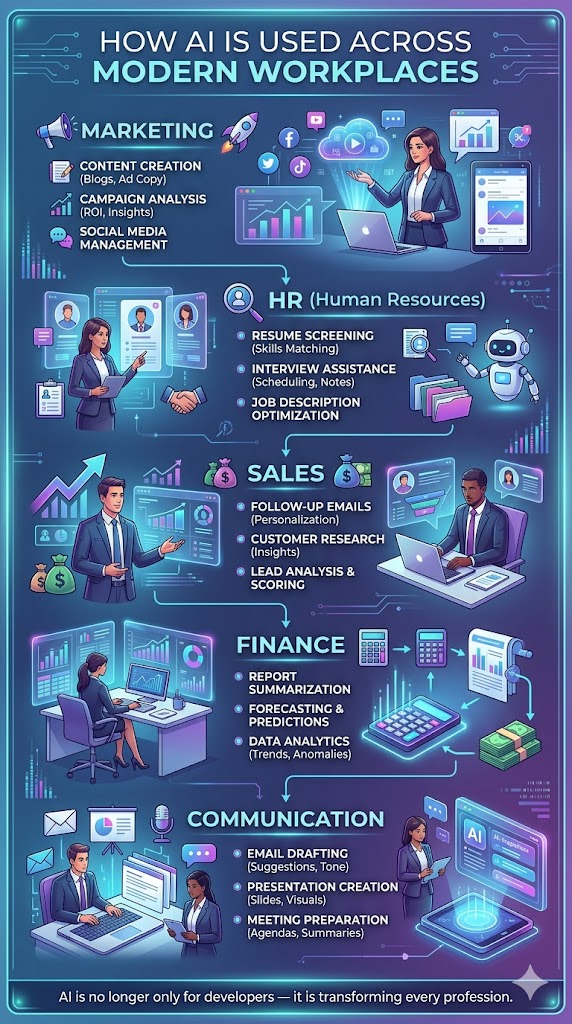
AI tools are now being used in almost every department:
- Marketing teams use AI for content and campaigns
- HR teams use AI for screening resumes
- Sales teams use AI for writing emails and research
- Finance teams use AI for summarising reports
- Business teams use AI for presentations and analysis
You do not need to build AI systems yourself. But if you understand how AI works and how to use it properly, you immediately become more efficient and confident at work.
The workplace is changing quickly. AI is no longer replacing only repetitive work. It is improving how professionals think, prepare, write, present, and communicate.
What Does “Understanding AI” Actually Mean?
Understanding AI does not mean becoming a software engineer overnight.
You do not need to:
- Learn advanced coding immediately
- Build machine learning models
- Become a data scientist
Instead, AI literacy means:
- Knowing what AI tools can do
- Understanding their limitations
- Giving clear instructions to AI tools
- Checking AI-generated output critically
- Using AI responsibly in professional situations
Think about it this way: you do not need to know how to build a car engine to drive safely and confidently. But basic understanding makes you more capable and responsible.
The same applies to AI.
Learn how to combine AI tools, communication, and digital marketing skills to become industry-ready from day one
How AI Is Improving Workplace Communication
1. Better Email Writing
AI tools like ChatGPT, Gemini, and Microsoft Copilot can help professionals draft emails quickly.
However, AI only creates the first draft.
You still need to:
- Adjust tone
- Add context
- Make the message professional
- Ensure accuracy
- Personalise communication
This editing ability is a communication skill, not a coding skill.
2. Better Meeting Preparation
Freshers often struggle during meetings because they lack confidence or preparation.
AI tools can help by:
- Summarising long reports
- Researching companies quickly
- Generating discussion points
- Preparing possible interview questions
- Simplifying technical information
This allows professionals to contribute more confidently during discussions.
3. Simplifying Complex Information
Many workplace documents are difficult to understand:
- Reports
- Data sheets
- Presentations
- Technical documents
- Financial summaries
AI can simplify this information into plain language.
Once you understand the content clearly, you can explain it better to clients, managers, and colleagues.
The ability to explain complicated ideas simply is one of the most valuable communication skills in any company.
Why Communication Skills Matter More in the AI Era
Prompting Is Communication
One of the most important AI skills today is prompting.
A prompt is simply the instruction you give to an AI tool.
For example:
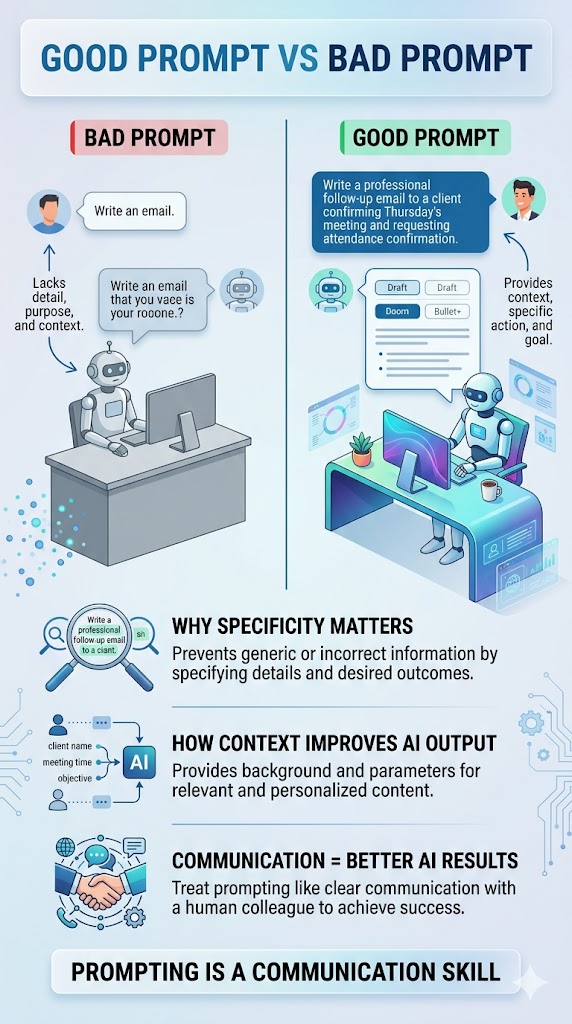
Weak Prompt:
“Write an email.”
Better Prompt:
“Write a professional follow-up email to a client confirming Thursday’s meeting and requesting attendance confirmation.”
The second prompt gives better results because it provides clarity and context.
This is exactly how professional communication works in real life as well.
People who communicate clearly:
- Solve problems faster
- Get better responses
- Work more efficiently
- Lead discussions effectively
AI Can Write, But Humans Still Think
AI can generate content quickly, but it does not fully understand:
- Human emotions
- Workplace relationships
- Company culture
- Business context
- Audience expectations
That human judgment still matters.
For example:
- AI can draft a client email
- But you decide the tone
- AI can summarise a report
- But you decide what matters most
- AI can provide information
- But you decide the final strategy
This combination of AI support and human communication is what companies value most.
Your career growth depends on how well you adapt to AI-driven workplaces. Start building future-ready skills today
Practical Ways Freshers Can Use AI to Communicate Better
Improve Professional Writing
Use AI tools to:
- Improve grammar
- Shorten long paragraphs
- Make emails professional
- Refine reports
- Improve clarity
Reading both your original draft and the AI-improved version helps you learn faster.
Prepare for Interviews and Presentations
Before interviews or presentations, ask AI:
- What questions might be asked?
- What objections may arise?
- How can I explain this more clearly?
This improves confidence significantly.
Understand Reports and Data Faster
If you receive a complicated report, AI can help identify:
- Key points
- Trends
- Important insights
- Simple explanations
This helps freshers speak more confidently during meetings.
Practise Clear Explanations
You can ask AI to simplify your ideas.
For example:
“Explain this concept in simple language.”
This helps improve:
- Public speaking
- Presentation quality
- Client communication
- Teaching ability
What Employers Want in 2026
Modern employers are not only hiring people with technical knowledge.
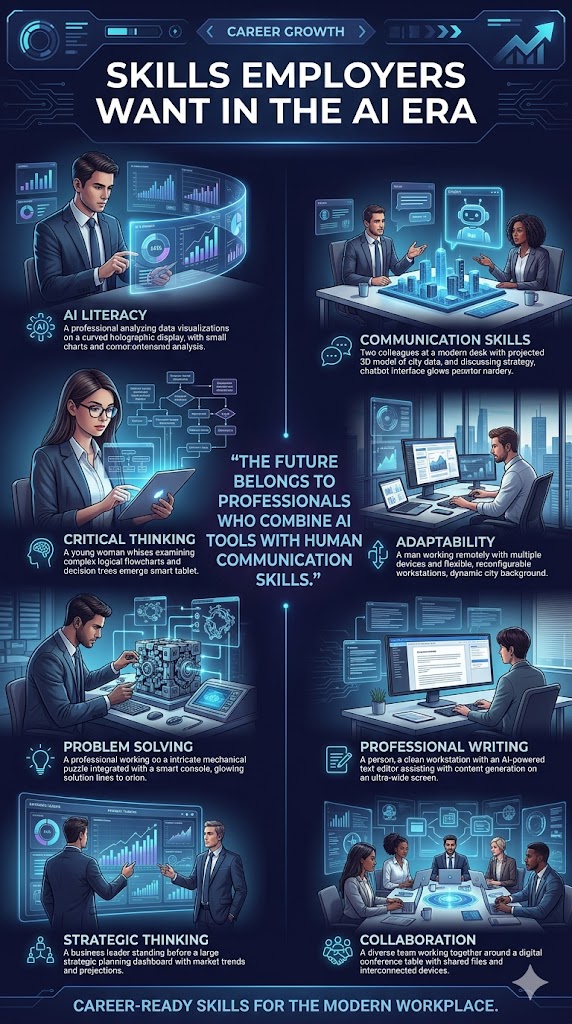
They are looking for professionals who can:
- Use AI tools responsibly
- Think critically
- Communicate clearly
- Write professionally
- Adapt quickly
- Solve problems efficiently
The professionals who combine AI awareness with strong communication skills will always have a competitive advantage.
This is why AI literacy is becoming essential across industries.
Frequently Asked Questions
Do I Need Coding Skills to Use AI?
No. Most AI tools used in business, marketing, HR, communication, and office work do not require coding knowledge.
What matters more is:
- Clear thinking
- Good prompting
- Communication ability
- Critical analysis
Will AI Replace Communication Jobs?
AI may automate repetitive tasks, but it cannot fully replace:
- Human judgment
- Emotional intelligence
- Relationship building
- Strategic thinking
- Leadership communication
Professionals who understand AI and communicate well will become even more valuable.
How Can Freshers Start Learning AI?
Freshers can begin by using tools like:
Use them for:
- Writing emails
- Summarising documents
- Preparing presentations
- Researching topics
- Practising communication
A structured learning program can further improve practical understanding.
Conclusion
AI is not just changing technology. It is changing how people work, think, and communicate.
Understanding AI will not only make you more productive. It will make you:
- Better at explaining ideas
- More confident in meetings
- Faster at learning
- Stronger in professional communication
- More valuable in the workplace
The future belongs to professionals who can combine AI tools with human communication skills.
At Learn2Earn Labs, we focus on helping students and freshers become exactly that — AI-aware, communication-strong, and career-ready professionals for the modern workplace.