AI-Integrated Industry Training:
Web Development, Data Analytics, Digital Marketing, Java & Python
|
2 Months Practical Training + 1 Month Internship
|
Fee:
₹9,999 per Program
|
Apply Now
Why Most Beginners Feel Confused About Programming Skills
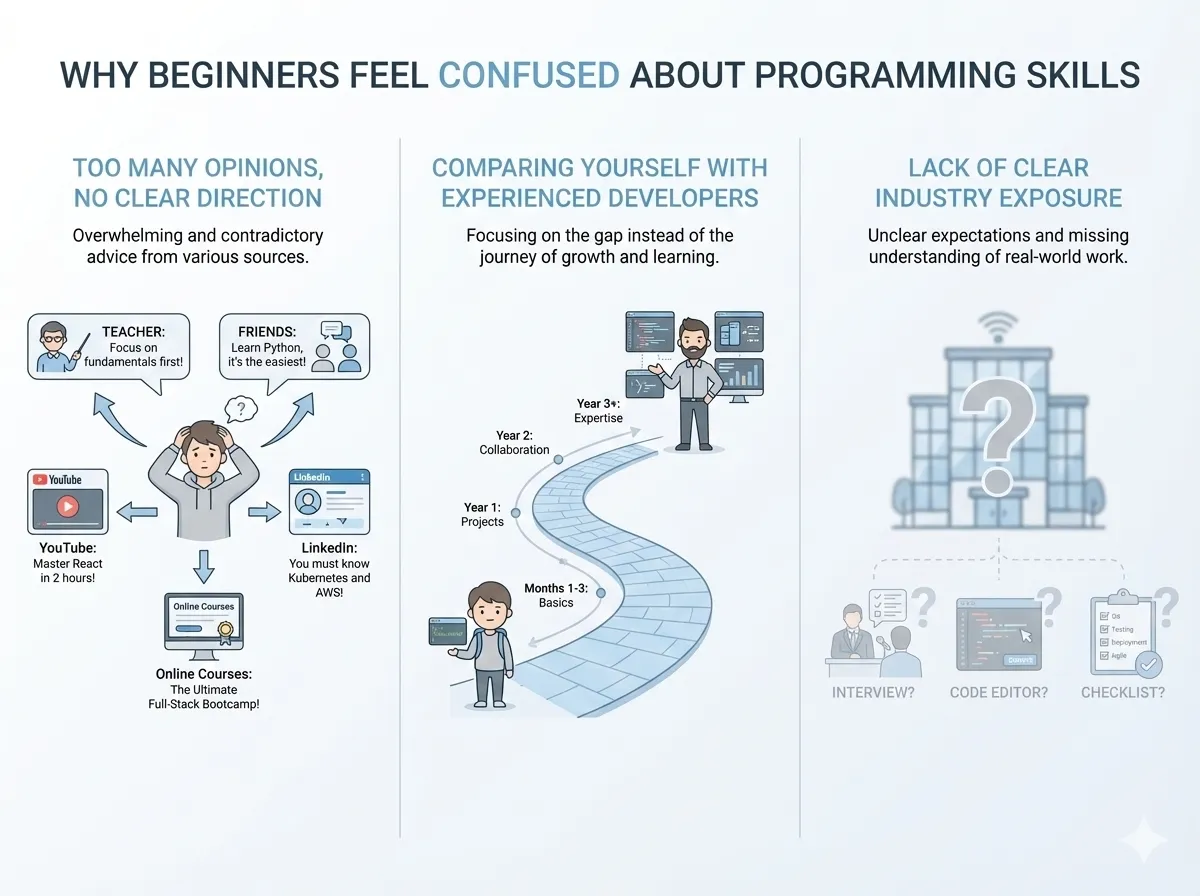
Too Many Opinions, No Clear Direction
Beginners hear advice from teachers, friends, YouTube, LinkedIn, and course platforms. Each source sets a different expectation. This makes students unsure about programming skills required for a job.
Comparing Yourself With Experienced Developers
Many learners compare their first six months with someone who has five years of experience. This comparison creates unnecessary fear and self-doubt.
Lack of Clear Industry Exposure
Most beginners do not know what companies actually expect from freshers. Without this clarity, it becomes difficult to judge how much coding is required to get a job.
What Level of Programming Is Considered Job Ready?
Job Ready Does Not Mean Expert
A job-ready programmer is not someone who knows everything. A job-ready programmer is someone who can understand problems and convert logic into working code.
Core Abilities That Define Job Readiness
Companies look for:
Logical thinking
Clear understanding of fundamentals
Willingness to learn
Ability to debug and improve
This is the real meaning of job-ready programming skills.
Why Perfection Is Not Expected
Freshers are hired with the expectation that they will grow on the job. Companies focus more on potential than perfection.
Programming Skills Required for Entry-Level Jobs
Core Programming Fundamentals
For entry-level roles, companies expect:
Variables and data types
Conditional statements
Loops
Functions
Basic data structures
These form the foundation of programming knowledge needed for software jobs.
Logic Over Syntax
Knowing how to think through a problem matters more than memorizing syntax.
Why Problem Solving Matters More
Syntax can be searched. Logic cannot. Interviewers evaluate how you approach a problem, not how fast you recall code.
Minimum Programming Skills for Freshers
One Language Is Enough
Freshers often ask if they should learn many languages. The truth is simple.
How Much Python, Java, or JavaScript Is Enough for a Job?
One language is enough if you:
Understand core concepts
Can write programs without copying
Can explain your code clearly
This meets the minimum programming skills for freshers.
Basics That Must Be Strong
Writing simple programs
Handling errors
Understanding program flow
Is Basic Programming Enough for a Software Job?
What “Basic Programming” Really Means
Basic programming does not mean shallow knowledge. It means strong fundamentals.
When Basic Skills Are Enough
Basic programming is enough when you can:
Solve beginner problems
Build small applications
Debug your own code
When Basic Skills Are Not Enough
If you only memorize syntax without understanding logic, basic programming will not be enough.
How Much Coding Is Required to Get a Job?
There Is No Fixed Number
There is no fixed number of hours or programs that guarantee a job.
A Practical Practice Pattern
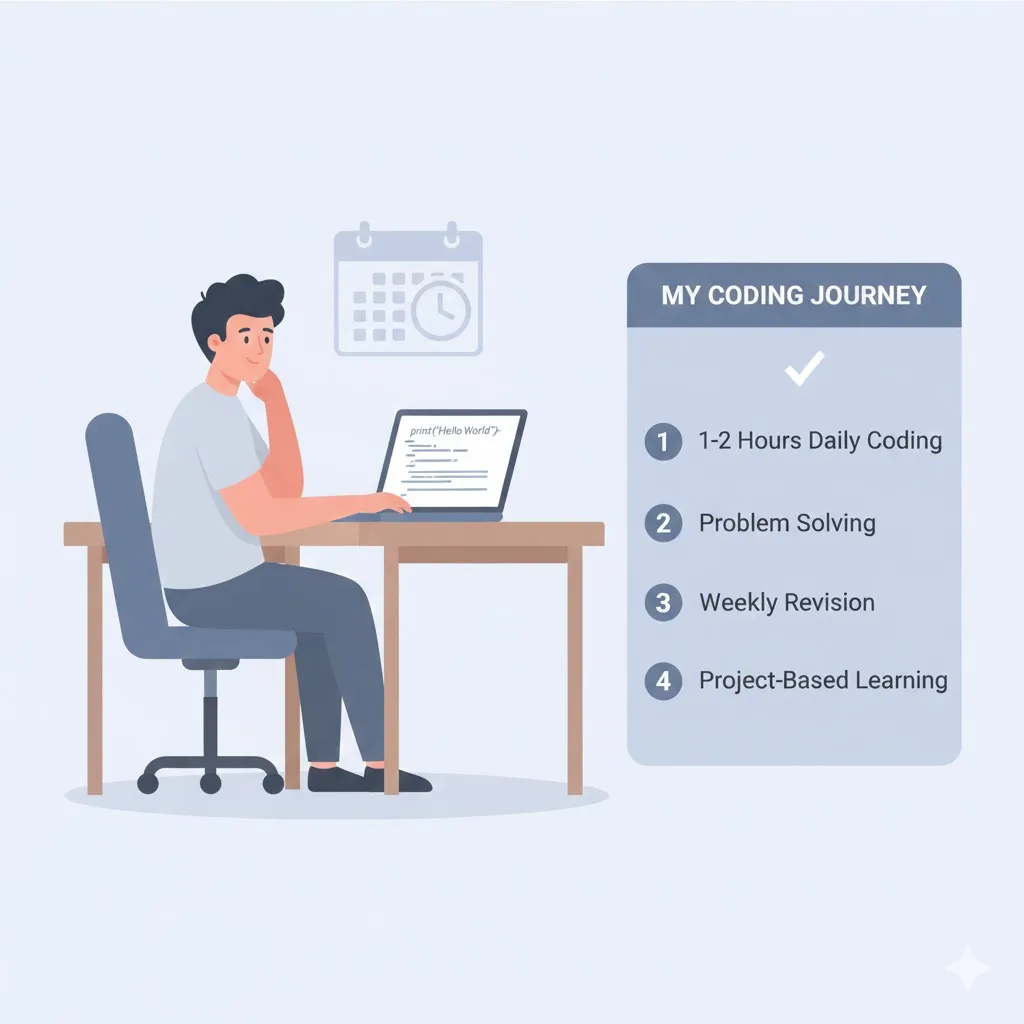
Most job-ready beginners follow this routine:
1–2 hours of daily coding
Regular problem solving
Weekly revision
Project-based learning
This answers the common question, how much programming practice is enough.
Competitive Coding vs Practical Coding
Why Competitive Coding Is Not Mandatory
Competitive coding improves logic but is not required for all jobs.
Practical Coding for Jobs
Companies prefer candidates who can build real-world solutions.
What Freshers Should Focus On
Focus on practical coding that helps you understand how software works.
What Companies Actually Expect from Programmers
Expectations in Interviews
Interviewers expect:
Clear explanation of logic
Honest answers
Learning attitude
Expectations During Training
Companies train freshers after hiring. They do not expect job-ready perfection.
Expectations After Joining
Once you join, your responsibility is to learn, adapt, and contribute.
This clears confusion around what companies actually expect from programmers.
Projects vs Programming Knowledge: What Matters More?
Why Projects Matter
Projects show how you apply programming concepts.
How Many Projects Are Enough for a Fresher?
Usually:
2–3 well-explained projects are enough
What Kind of Projects Recruiters Prefer
Projects that:
Solve real problems
Are complete and functional
Reflect your understanding
This balance answers the debate of projects vs programming knowledge.
How to Know If Your Programming Skills Are Enough
Self-Assessment Checklist
Ask yourself:
Can I solve problems independently?
Can I debug errors without panic?
Can I explain my code confidently?
Signs You Are Ready to Apply
If your answer is mostly yes, your programming skills to get hired as a fresher are already forming.
Common Myths About Programming Jobs
Myth: You Must Know Everything
No one knows everything in programming.
Myth: Only Top Coders Get Jobs
Most software jobs are filled by average programmers with strong fundamentals.
Myth: More Languages Mean Better Jobs
Depth in one language is more valuable than shallow knowledge of many.
How Long Does It Take to Become Job Ready in Programming?
Time for Absolute Beginners
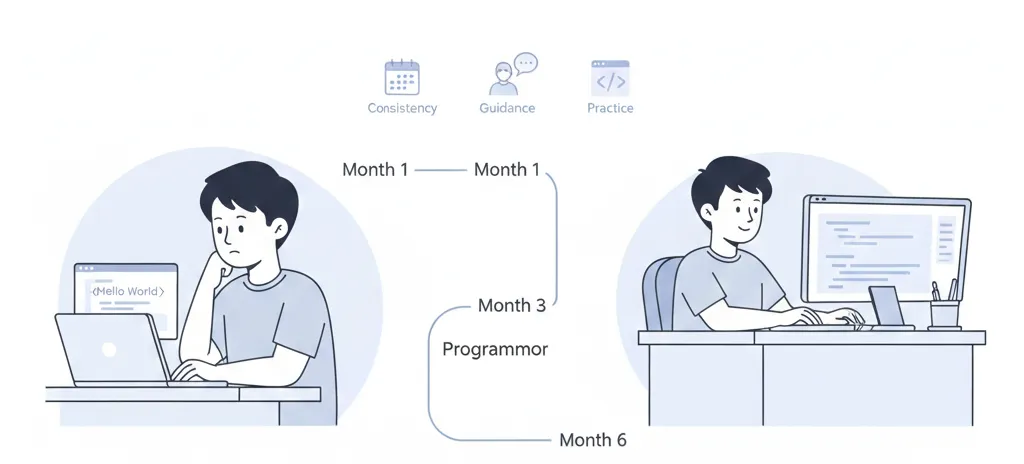
With consistency, beginners usually become job ready in 3–6 months.
Time for Students With Some Background
Students with basic exposure may take less time.
Role of Consistency and Guidance
Good guidance and daily practice reduce confusion and speed up learning.
When Should You Start Applying for Programming Jobs?
Why Waiting Too Long Is a Mistake
Waiting for perfection delays growth and confidence.
Learn While Applying Strategy
Applying early helps you understand real expectations and improve faster.
This answers when should you start applying for programming jobs.
Programming Skills to Get Hired as a Fresher
Summary of Must-Have Skills
Strong basics
Logical thinking
Practical coding
Simple projects
Communication skills
What You Can Learn After Getting the Job
Advanced topics can be learned on the job. That is how most professionals grow.
Final Advice for Beginners
Programming is not about knowing everything. It is about continuous learning and problem solving.
If you are asking how much programming is enough for a job, it means you are serious about your career. Focus on fundamentals, practice consistently, and trust the process.